
New blood tests that might predict Alzheimer’s years before symptoms begin may sound tantalizing for people who worry about later-in-life dementia. But doctors say they aren’t quite ready yet — and besides, you don’t need a test before trying to lower your risk.
The U.S. Food and Drug Administration has cleared four blood tests to help doctors diagnose whether Alzheimer’s — not another kind of dementia or something else — is behind someone’s memory problems or other cognitive symptoms. Some laboratories and online services offer their own tests. Faster diagnosis can help people with early-stage Alzheimer’s qualify for drugs that can modestly slow the worsening of their symptoms.
Yet dementia specialists say people without symptoms also seek those tests even though they’re neither approved nor recommended for that population.
What Alzheimer’s blood tests can and can’t do
Like many people who have watched a loved one succumb to Alzheimer’s, Mark Yost wonders about his own risk even though he doesn’t have symptoms.
“I want to know what my status is,” said Yost, 60, of Phoenix. And if signs of trouble develop, “what I can do about it to either avoid it or slow it down.”
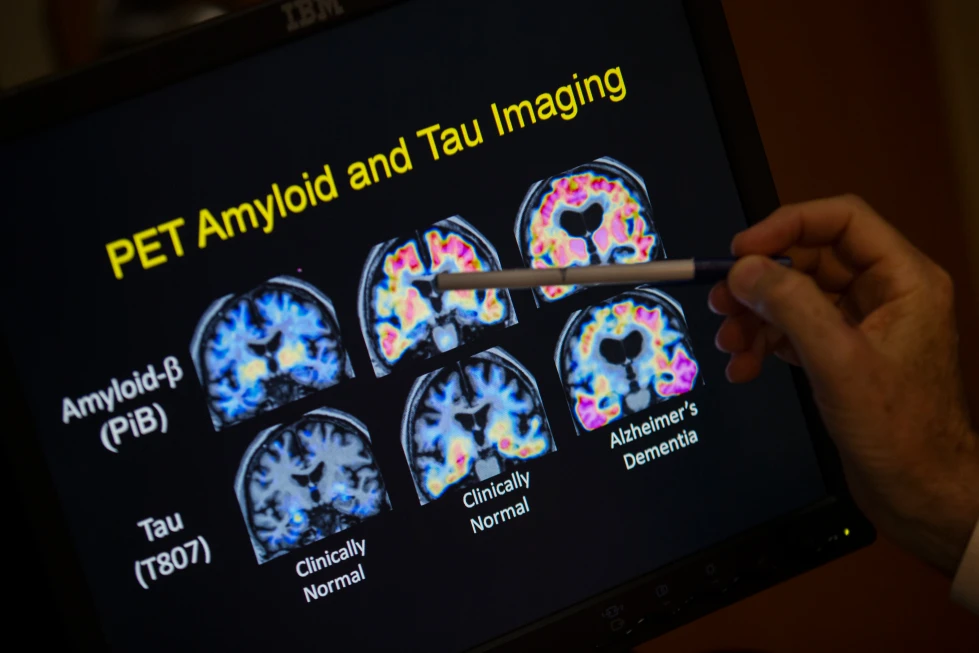
It’s not clear what causes Alzheimer’s, but its telltale markers are abnormal forms of two proteins. Sticky beta-amyloid can build into brain-clogging plaque over decades, eventually spurring neuron-killing tau tangles that lead to symptoms. Blood tests that measure a tau type called p-tau217 seem particularly good at reflecting amyloid buildup in people with symptoms.