
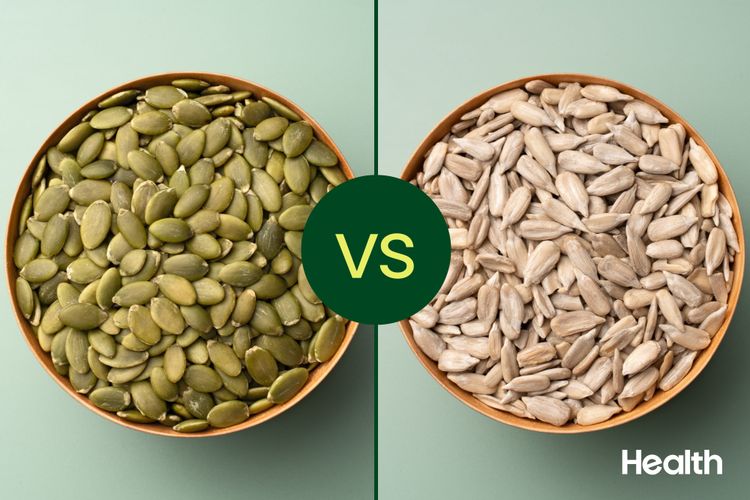
Pumpkin seeds and sunflower seeds can top just about anything, from soups and salads to yogurt and oatmeal. But is one seed a better choice than the other, even slightly, for getting enough healthy fats in your diet? Keep reading to find out.
Sunflower Seeds Are a Better Source of Healthy Fats
Both pumpkin and sunflower seeds are rich in healthy fats, but sunflower seeds contain slightly more. An ounce of sunflower seeds packs 14.1 grams of fat, while the same serving of pumpkin seeds contains 13.9 grams.
However, the difference is minimal, and both seeds are excellent sources of unsaturated fats, which support heart health, especially when they replace saturated fats in the diet.
Around 70% of the fat in sunflower seeds is polyunsaturated, which studies show can support heart health. Swapping saturated fats for polyunsaturated fats, such as those found in sunflower seeds, can help lower LDL (“bad”) cholesterol and may reduce the risk of cardiovascular disease.1
Pumpkin seeds still provide a good amount of healthy fats and make an excellent addition to a heart-healthy diet.
Pumpkin Seeds vs. Sunflower Seeds: Nutrition at a Glance
| | Pumpkin Seeds (per 28-g serving) | Sunflower Seeds (per 28-g serving) |
| Calories | 163 | 155 |
| Protein | 8.45 grams (g) | 5.47 g |
| Fat | 13.9 g | 14.1 g |
| Carbs | 4.17 g | 4.34 g |
| Fiber | 1.84 g | 2.55 g |
| Vitamin E | 0.15 milligrams (mg) or 1% of the DV | 7.4 mg or 49% of the DV |
| Magnesium | 156 mg or 37% of the DV | 36.6 mg or 8.7% of the DV |
| Zinc | 2.17 mg or 20% of the DV | 1.5 mg or 14% of the DV |
Which Seed Should You Choose?
Both pumpkin seeds and sunflower seeds are nutrient-dense and can fit into a well-rounded diet.
Sunflower seeds may be a good choice if you’re focused on getting slightly more healthy fats, carbohydrates, and fiber. One serving of sunflower seeds also provides 7.4 mg of vitamin E (49% of your recommended daily intake).2
If you’re looking for more protein, pumpkin seeds may be the way to go, with just over 8 g per serving. Pumpkin seeds are also a better source of magnesium (156 mg per serving, or 37% of what you need each day) and zinc (2.17 mg, or 20% of your recommended daily intake).3
While one seed may be slightly better than the other, depending on your health goals, both pumpkin seeds and sunflower seeds are nutritious additions to any diet, and can be enjoyed on their own or paired with fresh fruit as a snack, or sprinkled over salads, oatmeal, or yogurt for a crunchy texture.