

Home decor trends 2026 favor warmth, tactile materials, and long-term livability over performative, social-media-driven looks. Rich earth tones and jewel colors are replacing stark white and gray, natural materials are showing up everywhere from countertops to lighting, and curved furniture is softening rooms that spent a decade being sharp and minimal. Houzz research backs this shift toward homes built to last, not just photograph well.
TL;DR:
- Rich earth tones and jewel colors are replacing neutral whites and grays to create warmer, more lived-in interiors in 2026.
- Purposeful rooms with defined functions are regaining popularity as open plans give way to more compartmentalized and flexible spaces.
- Investment in long-term features like wider doorways and curbless showers is driven by 61% of homeowners planning to stay in their homes over a decade.
- Natural materials and sculptural stone slabs require careful selection and in-person viewing to avoid overwhelming a room’s energy or misjudging scale.
- Affordable updates such as paint, textiles, and artisan hardware allow homeowners to test the trend directions without large structural commitments.
Table of Contents
- What Are the Top Home Decor Trends for 2026?
- How Do You Actually Apply These Trends in Your Home?
- Accent Colors and Complementary Tones Trending Alongside Main Palettes
- Integration of Smart Home Technology and Decor Synergy
- Influence of Global Cultural Trends on Home Decor in 2026
- Popular Statement Lighting Designs and Fixtures
- Emerging Wallpaper and Wall Treatment Trends
- Textile Trends: Fabrics and Patterns for Upholstery and Drapes
- What Should You Actually Prioritize This Year?
- Where This Trend Research Comes From
- Sources
- FAQ
What Are the Top Home Decor Trends for 2026?
Here’s the shortlist worth knowing before you commit to anything, whether that’s a gallon of paint or a full kitchen overhaul.
- Warm, earthy palettes. Ochre, oxblood, olive, and tobacco brown are pushing out the all-white and greige look that dominated the last decade. Designers point to a broader shift toward rich earth tones and saturated jewel colors as homeowners look for rooms that feel warmer and more lived-in.
- Collected, layered interiors. Rooms are starting to look like they evolved over time rather than got styled in an afternoon. Mixed eras, mixed patterns, and a few imperfect objects now read as more sophisticated than a matched set.
- Natural materials and sculptural stone. Think heavily veined marble, honed limestone, and reclaimed wood with visible grain and knots. These materials carry weight and history that manufactured surfaces can’t fake.
- Curved, sculptural furniture. Sofas, chairs, and even kitchen islands are trading hard angles for soft curves. It’s a quieter shift than it sounds, but it changes how a room feels to move through.
- Biophilic design. Bringing the outdoors in through plants, natural light, and materials that echo the landscape outside your window. This isn’t new, but it’s become a baseline expectation rather than a bonus feature.
- Defined rooms and purposeful zoning. Wide open floor plans are losing ground to rooms with actual walls and actual jobs. A reading nook, a proper dining room, a mudroom that catches the chaos before it hits your living space.
- Texture and handcrafted details. Hand thrown ceramics, woven textiles, and hardware with visible tool marks. Perfection is out; evidence of a human hand is in.
- Sustainability and durability. Fast furniture is losing appeal as people invest in pieces meant to last decades, not seasons.
- Smaller, smarter kitchens. Compact, highly functional kitchens are gaining traction over sprawling, oversized ones that rarely get used to capacity.
- Long-term livability features. Wider doorways, curbless showers, and flexible rooms that can adapt as your needs change over the next ten or twenty years.
That last point matters more than most people realize. Houzz’s research found that 61% of homeowners plan to stay in their homes 11 years or more after a renovation, and 44% describe their home as a forever home. That’s not a small design detail. It’s the reason so many of 2026’s biggest trends lean toward permanence over trend chasing.
If you want a quick, low-cost way to test any of these directions, start with paint or textiles. A jewel-toned accent wall or a set of linen curtains gives you a preview of the mood without committing to anything structural. Save the bigger investments, like natural stone counters or curved built-ins, for changes you’re confident you’ll want to live with for years.
How Do You Actually Apply These Trends in Your Home?
Knowing the trend list is one thing. Knowing where to spend your money and where to hold back is another. Here’s how each major trend translates into real decisions.
Warm palettes: where to commit and where to test
Designers are moving decisively away from the cool, neutral palettes that defined the 2010s. The rationale is straightforward: rich earth tones and jewel colors photograph less dramatically than stark white, but they feel warmer in daily life, which is exactly the point.
Paint is the cheapest entry point. Try ochre or olive in a powder room or an accent wall before painting an entire open living area. Deep blues work well in bedrooms and dining rooms, where you want a moodier, more intimate feel. If you’re nervous about commitment, layer color through pillows, throws, and art first. Avoid going all in on a single trend color across every room. That flattens a home instead of layering it, and it’s the fastest way to make a bold palette feel dated in two years instead of ten.
Collected, layered interiors over cookie-cutter staging
HouseBeautiful’s designer roundup describes the mood shift plainly: softer forms, layered materials, and rooms that feel collected rather than curated. That’s a departure from the matched showroom look that dominated listing photos for years.
In practice, this means mixing a vintage rug with modern furniture, or pairing a family heirloom with something you bought last month. Thrift stores, estate sales, and inherited pieces are back in favor. The caution here: layering isn’t the same as clutter. Every piece should earn its spot, even if it doesn’t match the others.
Natural materials and sculptural stone: know before you commit
Sculptural stone with dramatic veining is one of the most photographed trends of the year, but it’s also one of the easiest to get wrong. Veranda’s trend coverage flags a real risk: natural stone variation can dramatically change a room’s energy, and slabs often look nothing like the small sample chip you picked at the showroom.
Pro Tip: Always view large stone slabs in person before ordering, especially for kitchen islands or statement bathroom walls. Veining that looks striking on a 12-inch sample can overwhelm an entire counter once it’s scaled up.
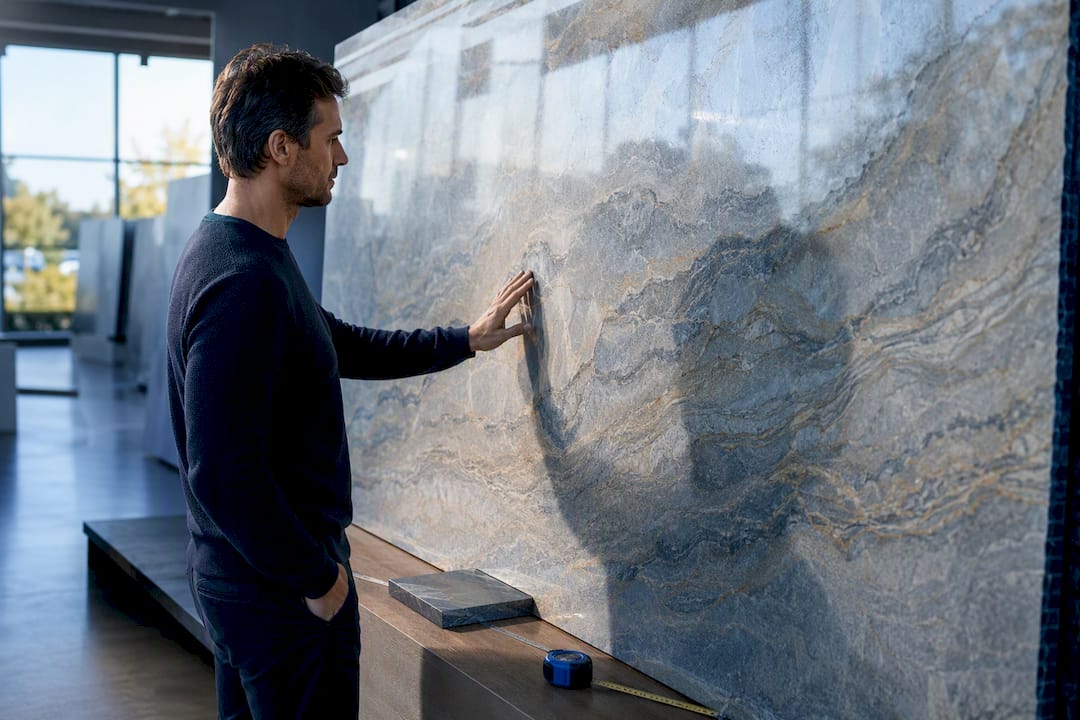
Budget-conscious version: engineered quartz with a stone-inspired pattern, or a stone-look tile backsplash. Investment version: a full slab island or a book-matched stone shower wall, which typically requires expert templating to align the pattern correctly.
Curved furniture and softer silhouettes
Curved sofas, rounded coffee tables, and arched doorways are showing up across price points now, not just in high-end showrooms. The rationale designers give is about flow: curves soften traffic patterns and make small rooms feel less boxed in.
Where it works best: living rooms and primary bedrooms, where you have room to let a curved piece breathe. Where to be careful: tight galley kitchens or narrow hallways, where a rounded island can eat into clearance you actually need.
Biophilic design and indoor-outdoor connection
Bringing nature indoors through plants, unfinished wood, and generous natural light has moved from trend to baseline. Skylights, larger windows, and covered outdoor living spaces are increasingly treated as standard renovation requests rather than luxury add-ons.
Budget version: a few large potted plants and swapping heavy drapes for sheer linen. Investment version: a folding glass wall connecting a kitchen to a patio, or a screened porch built as a genuine second living room.

Defined rooms and purposeful zoning
The decade-long push toward open concept everything is losing steam. Defined rooms with real walls and specific jobs are returning, according to trend reporting that tracks smaller, more purposeful kitchens and the return of formal dining spaces. A living room that’s also the dining room that’s also the home office often serves none of those functions particularly well.
If a full remodel isn’t on the table, bookshelves, curtains, or a change in flooring material can visually zone a space without touching a single stud.
Texture, handcrafted details, and long-term livability
Handcrafted ceramics, woven baskets, and hardware with visible tool marks are replacing the flawless, mass-produced look that dominated big box stores for years. Reporting on 2026 in/out lists notes a clear move toward mixed metals and durable, artisanal pieces over disposable furniture.
Pro Tip: When mixing metal finishes, pick one as the dominant tone (say, brushed brass on your lighting) and use a second metal only as an accent on smaller hardware. Balancing scale this way keeps a room from reading like a mismatched collection of spare parts.
Houzz’s design data shows real staying power behind these choices: 61% of homeowners plan to stay in their home 11 years or longer after a renovation, and 44% call their home a forever home. That’s exactly why bigger investments, like curbless showers, wider doorways, and flexible bonus rooms, are gaining traction. When you’re not planning to move, spending on livability rather than resale trends actually makes financial sense.
Low-cost entry points into this trend: swap out builder-grade hardware for handmade or artisan pieces, one room at a time. Higher-investment version: reworking a bathroom for a curbless shower or widening a hallway doorway, both of which usually require plumbing or structural work but pay off over a decade of daily use.
Accent Colors and Complementary Tones Trending Alongside Main Palettes
If the main event in 2026 is earthy neutrals and jewel tones, the supporting cast is just as important. Terracotta, rust, and burnt orange are showing up as accent shades against deep green and navy backdrops, giving rooms warmth without tipping into a full color statement. Muted golds and brass tones are doing similar work in metals and lighting, picking up the ochre and tobacco brown palette without competing with it.
Cooler accents haven’t disappeared. Slate blue and deep teal are common pairings against warm wood tones, offering just enough contrast to keep an earthy room from feeling flat. Cream and bone white are also sticking around, but as a supporting neutral rather than the star of the room, usually on trim, ceilings, or larger upholstery pieces where a full jewel tone would feel like too much.
The easiest way to test accent pairings without repainting anything: bring home a few paint chips or fabric swatches and hold them against your existing furniture in daylight and lamp light both. Colors that look great under a showroom’s fluorescent lights can shift entirely once they’re in your actual living room after sunset.
Integration of Smart Home Technology and Decor Synergy
Smart home technology in 2026 is less about visible gadgets and more about tech that disappears into the design. In-wall charging stations, hidden speakers built into ceiling panels, and lighting systems controlled through a single app are replacing the era of visible hubs and tangled cords sitting on every counter.
Lighting is where this shows up most. Smart bulbs and dimmers now let you shift a room’s color temperature to match the mood of a warm-toned palette, cooler and brighter for daytime tasks, warmer and dimmer in the evening to complement rich wall colors. Motorized shades are also gaining ground, particularly in rooms designed around natural light and biophilic elements, since they let you control glare without covering up a window you specifically designed the room around.
The bigger shift is toward integration rather than gadgetry for its own sake. Homeowners investing in long-term livability are choosing systems that support aging in place, like voice-activated lighting and smart locks, over flashy features that mostly exist to impress visitors. A smart thermostat tucked behind a decorative panel does more for a room’s atmosphere than a device sitting in plain view ever will.
Influence of Global Cultural Trends on Home Decor in 2026
Global influences are shaping 2026 interiors in ways that go beyond a single “look.” Japandi’s blend of Japanese minimalism and Scandinavian warmth continues to shape furniture silhouettes, but it’s evolving into something less austere, warmer woods, softer curves, and a bit more color than the style’s earlier, starker phase.
Mediterranean and North African influences are showing up in tile work, plaster finishes, and warm terracotta tones, echoing the broader shift away from cold, minimal surfaces. Latin American design traditions are contributing bold color pairings and handwoven textiles that fit naturally into the “collected, layered” trend already dominating the year.
What ties these influences together is a preference for craftsmanship over mass production. Imported or artisan-made pieces, whether that’s hand-loomed textiles or hand-glazed tile, carry a story that a factory-made equivalent simply doesn’t. That’s consistent with the broader mood design press is calling “curated calm”, a rejection of performative style in favor of restraint that still feels personal and specific to the people living there.
Popular Statement Lighting Designs and Fixtures
Lighting in 2026 is doing double duty as sculpture. Oversized pendant lights with organic, hand-formed shapes are replacing the sharp geometric fixtures that dominated the past several years. Materials like blown glass, aged brass, and woven rattan are common choices, echoing the broader textural shift happening across the rest of the room.
Sconces are having a real moment too, particularly paired sconces flanking a bed or mirror in place of a single overhead fixture. This fits the “defined rooms” trend nicely, since layered lighting sources let a single room shift mood depending on the time of day or activity.
Warm-toned bulbs are now the default rather than the exception, supporting the broader move away from stark, cool lighting that made all-white rooms feel clinical. If you’re updating one fixture at a time, start with your dining room or entryway, the two spots where a statement piece gets noticed most and does the most to set the tone for a whole room.
Emerging Wallpaper and Wall Treatment Trends
Wallpaper is having a genuine comeback, but it looks different than the busy, all-over prints of decades past. Large-scale botanical prints, hand-painted murals, and textured grasscloth are leading the way, giving walls depth without overwhelming a room the way smaller repeating patterns can.
Plaster finishes are one of the biggest wall trends of the year. Lime wash and Venetian plaster techniques give walls a soft, matte texture that catches light differently throughout the day, a direct match for the tactile, handcrafted mood running through nearly every 2026 trend. These finishes work particularly well in bedrooms and dining rooms, where a bit of imperfection actually adds warmth.
Paneling is also back, though in a simpler form than the ornate wainscoting of earlier eras. Clean vertical or horizontal wood slats, often left unfinished or lightly stained, are showing up in entryways and primary bedrooms as a way to add texture without committing to a full wallpaper installation.
Textile Trends: Fabrics and Patterns for Upholstery and Drapes
Textiles are one of the fastest, cheapest ways to bring any of these trends into a room, and 2026’s fabric choices lean heavily toward texture over pattern. Bouclé, chenille, and heavy linen are dominating upholstery, giving furniture a tactile quality that fits the year’s emphasis on materials you actually want to touch.

Pattern hasn’t disappeared, but it’s shifting toward organic, hand-drawn motifs rather than crisp geometric prints. Botanical patterns, abstract brushstroke designs, and ikat-inspired weaves are showing up on everything from throw pillows to full drapery panels. These patterns pair naturally with the jewel-toned and earthy palettes leading the color trends, since they tend to include several complementary shades within a single fabric.
Drapes themselves are trending heavier and more substantial, a shift away from the sheer, barely-there panels that were popular for years. Velvet and heavyweight linen drapes add both warmth and a bit of acoustic softness to a room, which matters more in homes leaning into defined, purposeful spaces rather than one echoing open floor plan.
What Should You Actually Prioritize This Year?
If there’s one thread running through every 2026 trend, it’s this: design that assumes you’re staying put beats design built for a single photo. That’s the real story behind the shift toward natural materials, defined rooms, and features that support living comfortably for a decade or more.
Use a simple rubric when deciding where to spend money. Invest in materials and ergonomics you’ll touch daily, natural stone, solid wood furniture, wider doorways, better lighting layers. Update affordably through paint, textiles, and hardware, all reversible if your taste shifts. Skip fast furniture and features chosen purely to impress guests rather than serve your actual life. For more curated takes on what’s shaping culture and design conversations this year, curated story collections are available at Linkbiite.
— Igor
Where This Trend Research Comes From
These trends draw from a mix of designer interviews, retail data, and homeowner surveys published throughout the year.
- The 2026 U.S. Houzz Fall Design Trends Report covers homeowner renovation plans and long-term livability data.
- Elle Decor’s fall 2026 trend roundup breaks down the shift toward earth tones and jewel colors.
- HouseBeautiful’s designer predictions detail the move toward collected, layered rooms.
- Veranda’s 2026 forecast covers sculptural stone and material trends in depth.
- Redfin’s interior design trends report tracks the return of defined rooms and smaller kitchens.
- For broader coverage of culture and lifestyle stories shaping the year, visit Linkbiite.
Sources
- 2026 U.S. Houzz Fall Design Trends Report
- 6 Fall 2026 Interior Trends to Watch, According to Experts
- The Top 2026 Interior Design Trends, According to Designers
- Designers Predict These 7 Interior Design Trends Will Rule 2026
FAQ
What is the main home decor trend for 2026?
The dominant theme is warmth and longevity: rich earth tones, natural materials, and rooms designed for how you’ll actually live in them for the next decade, not just how they photograph.
Are open floor plans going out of style?
Fully open floor plans are losing ground to defined rooms with specific purposes, according to trend reporting tracking the return of purposeful zoning, though partial openness between kitchens and living areas remains common.
What colors are replacing all-white and gray interiors in 2026?
Rich earth tones like ochre, oxblood, olive, and tobacco brown, along with saturated jewel colors such as deep blues, are replacing the stark white and gray palettes that dominated the past decade.
Is natural stone worth the investment in 2026?
Natural stone with dramatic veining is trending, but designers recommend viewing large slabs in person before committing, since variation and scale can change a room’s entire feel once installed.
Why are homeowners investing in long-term livability features now?
Houzz found that 61% of homeowners plan to stay in their home 11 years or more after a renovation, which is pushing more people to prioritize durability and comfort over short-term trends.